Long Exposure · Interview · Exposure 002
Decomp Buddy puts 2,218 decomps and recomps a click away. Next: a phone app to install them
In an email interview, Maddie Thomas, who runs Tanooki Studios alone, reveals Decomp Buddy's companion phone app and talks about AI-written install plans, credit for the scene's developers, and lessons from the Nokia N-Gage.
By Nicholas De Leon · October 29, 2026, at 15:46 UTC · 13 min read
Getting a fan-made PC port of an old console game running usually starts with a long README: find the right release, check that your copy of the game is the right version, put the file in the right folder, and hope it launches.
Decomp Buddy handles that part. The free, open-source app for Windows, Mac and Linux, Steam Deck included, lists 2,218 decomps, recomps and PC ports, Maddie Thomas says, each downloaded from its developers' own page and set up from the player's own copy of the game. AI reads each project's README and docs ahead of time and writes the install steps, so nobody needs an AI account to install a game from the catalog. The first version came out on Sept. 13, and the app has shipped 20 releases since its GitHub repository went public on Oct. 4.
Over email, Thomas talked about building the catalog, the AI install plans, crediting the scene's developers and the Nokia N-Gage, and revealed what's next: a companion phone app, Decomp Buddy Remote, that installs games on your computer.
Hi there! I'm Maddie. I used to write about games. Now I build apps at Tanooki Studios, a studio of exactly one person: me.
Decomp Buddy started because I kept finding amazing fan-made PC versions of games I grew up with, then getting stuck halfway through the install guide. So I made something that does that part for you. It's grown to more than 2,200 games, and it's free, open source, and has no account and no ads.
Everything in it exists because of the people in the decomp and recomp scene, who spend years on this work for free. I'm just trying to get more people playing it. Thanks for having me.
The RaytraceHow did Decomp Buddy start? You mentioned you came from game journalism: does that background shape how you run it?
Yeah, my career actually started in PR. Fun fact: I was on the PR team for the Nokia N-Gage. They say you learn more from your failures than your successes, and yes, yes, I can confirm that. I then spent some time writing for an Xbox-exclusive publication, which is where I found my first real success.
Both of those jobs shape how I run Decomp Buddy. The N-Gage taught me that a great idea isn't enough if it's awkward to actually use. People won't fight their way through it, so making things easy comes first. Writing taught me to explain things in plain words, to check before I publish, and to credit my sources. That's why every game in Decomp Buddy links back to the people who made it, downloads come straight from their own pages, and nothing gets listed as playable until I've confirmed it is.
As for how it started: honestly, I was inspired by a few other launchers that I didn't have the best experience with. I never want to speak ill of anyone contributing to the decomp and recomp scene, so I'll just say they didn't work for me. That's generally my motivation for making apps: building the software I wish I'd had when something frustrated me. The very first version, back in September, did one thing. You pointed it at a game's GitHub page and it built you a folder that was ready to play. Everything else grew from there.
The RaytraceThe catalog pulls from portsdr.com, Alexbeav's PS1 recomp list and projects you've found yourself. How do you build it and keep it current?
Updating is actually pretty easy. Several times a day (three, as of yesterday), our system scans Reddit (about five different subreddits), and Bluesky. It also searches GitHub directly. Finally, it checks a few trusted websites and pulls out the GitHub links they point to. We never take a game's details from anywhere but the author's own project page. We want it straight from the source. Next, it confirms the link really is a decomp or recomp of a game. Once it passes, it joins our Addition Queue.
Every game in the queue shows up on our Addition Queue page, so authors can see the status of their project. Just enter your GitHub project link on our For Developers page and you can see exactly which step it's on. I built the queue system (lookup included) because at one point a game took about 48 hours on average to get through. Now, with simultaneous processing and a few other tricks, most games go live the same day they're found.
Here's every step a game goes through:
- Found. Our scans spot it, or a player or developer sends it in.
- Initial Check. Is this actually a game you can play? Tools, emulators and empty projects stop here. Projects without a playable download yet go on our Coming Soon list.
- Safety Check. A brand-new account, or a download uploaded by someone other than the project's owner, is held until I've looked at it myself.
- Install Instructions. AI reads the project's own docs and writes the install steps, and they have to pass automatic checks before they're accepted.
- Virus And Malware Scan. Every download is scanned, and the app will only install the exact file that was scanned.
- Box Art. We find the game's cover art.
- Live. It's in the app and on the website for everyone.
The RaytraceWalk me through the AI install plans. For each catalog project, what does the AI read, what does it write, and why make the plans ahead of time instead of when someone clicks install?
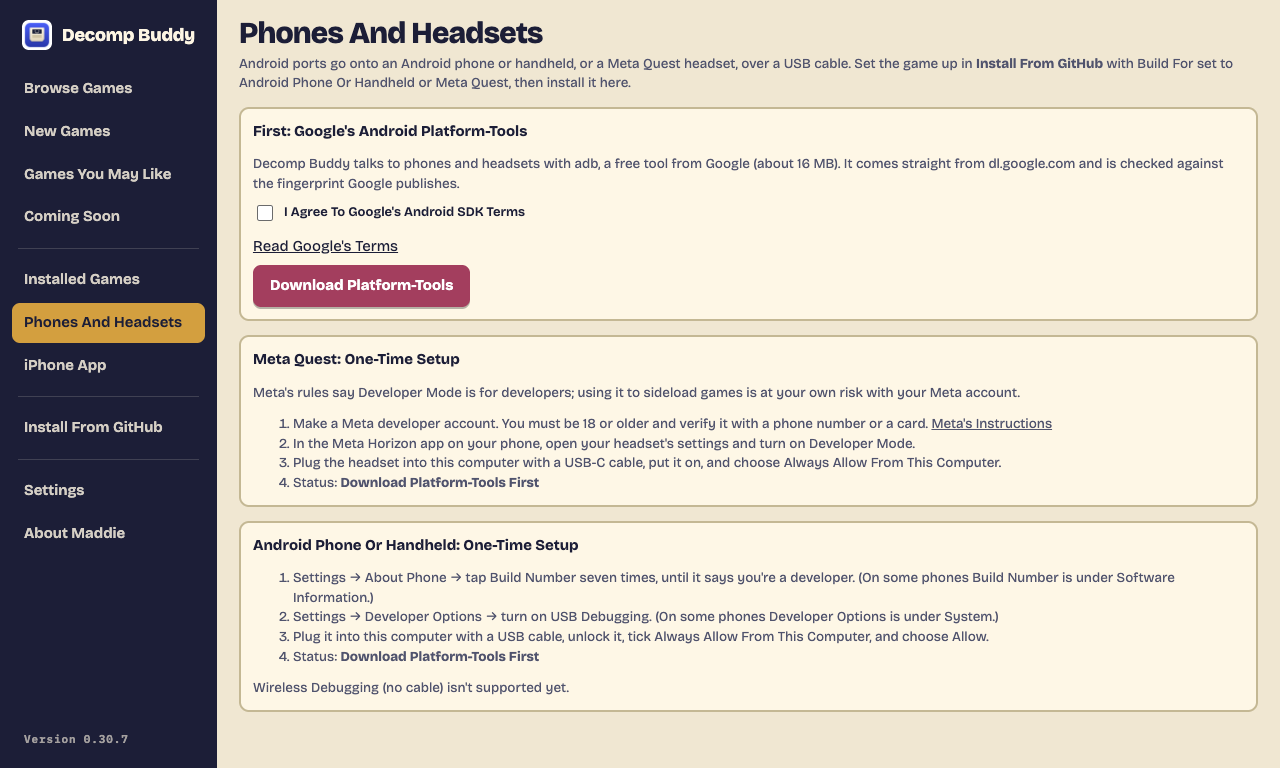
It reads what the project itself says: the README, any docs, the file layout, and the list of files in each release. It writes a short, structured install plan for each kind of computer. That means which release file to download for Windows, Mac, Linux, Android or a VR headset; which of your game files it needs; what that file must be named and which folder it goes in; and any checksum, region or version the project asks for. It also notes how mods work for that game, and anything it isn't sure about.
The rule I care about most is that it can only use what the project's own docs say. If a README doesn't give a checksum, the plan has no checksum. It never fills one in from memory.
Making the plans ahead of time means nobody needs an AI account, a key or a fast computer to install a game. You click Install and it works, free. It also means every plan has been checked before anyone uses it, and every player gets the same steps, instead of an AI improvising on someone's computer.
The RaytraceHow do you check those plans, and what happens when the AI misreads a README? Any memorable mistakes?
I'm going to completely jinx myself here, but I haven't come across any issues with the AI understanding the install process. I've tried over 200 games myself during testing, and they all installed and worked as instructed. I've gotten plenty of bug reports, but never one saying a game's install steps were wrong.
What I do watch for is a repo that's only a launcher or a mirror of someone else's project. The plan has to point at the real project, so the right people get the credit and the downloads. That's incredibly important to me. I know how much time a decomp or recomp takes (cheap plug for my own releases!), and I want the right people to get the tiny bit of glory (or blame) a decomp earns them for their time and talent.
Now that I've written that, I expect I'll see nothing but AI install mistakes. If that happens, that's on you.
The RaytraceFor projects outside the catalog, Install From GitHub works with Claude, any OpenAI-compatible service, a local model through Ollama, or Apple Intelligence. Why offer all of those, including the free local options?
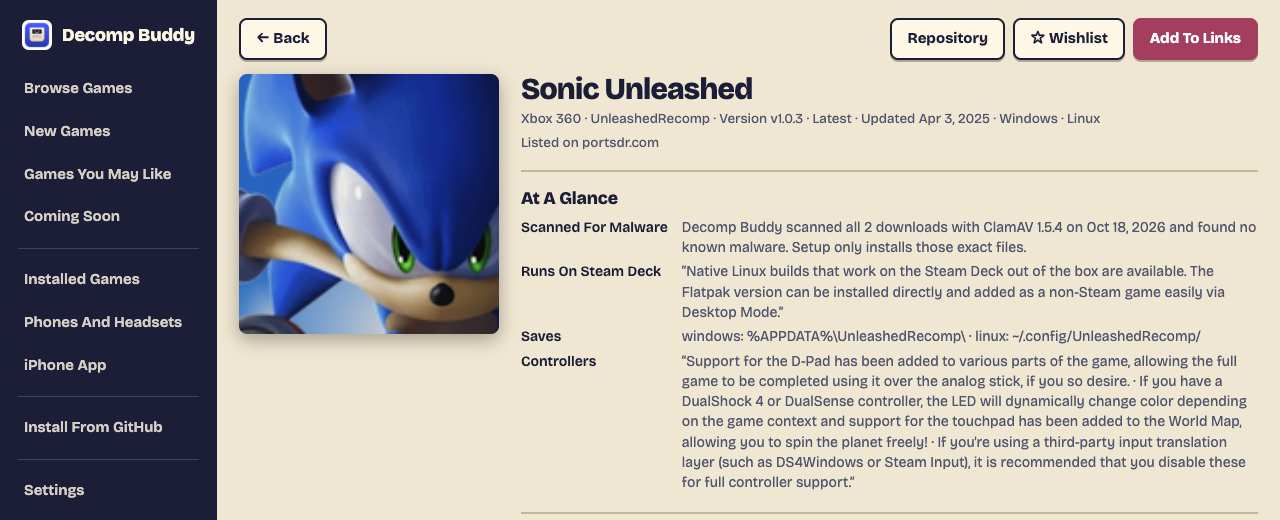
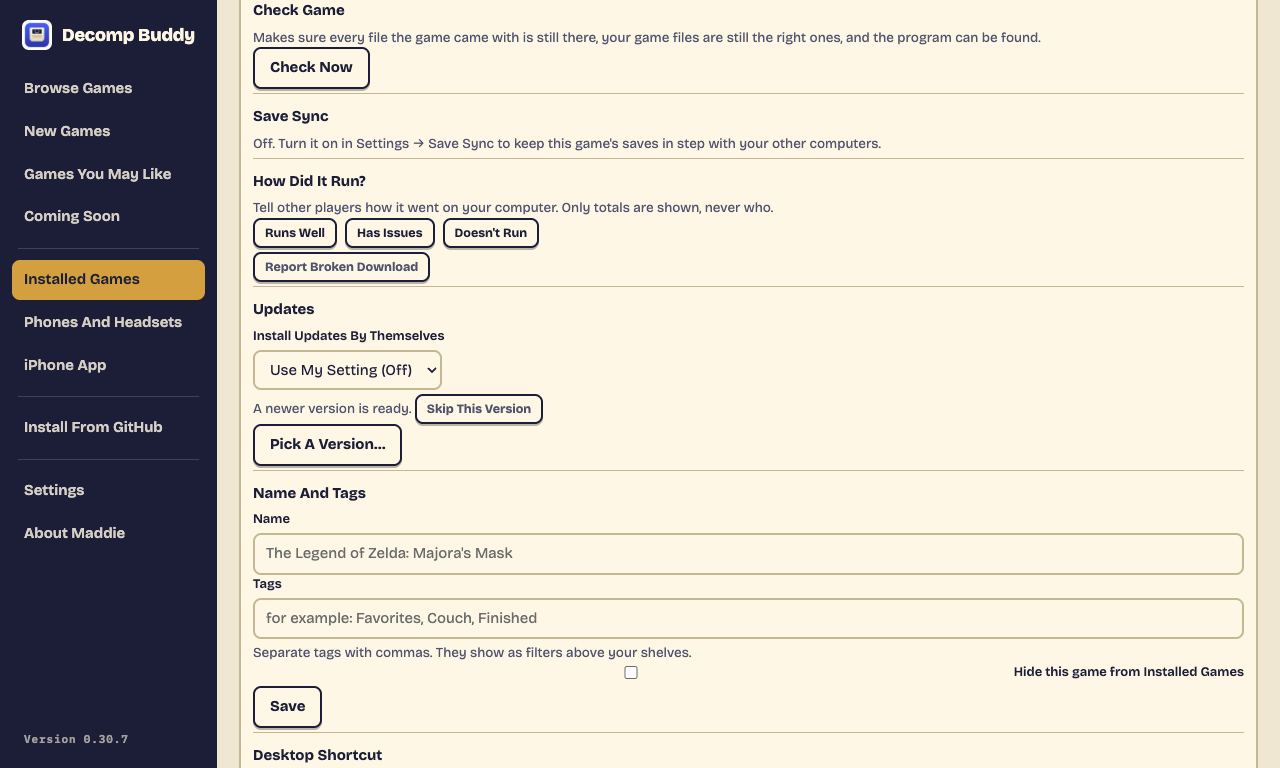
Because the few people who need it shouldn't have to pay, or sign up with one particular company. Use the AI service you already have, run a free model on your own computer, or on a recent Mac, use Apple Intelligence, which is already built in. But honestly, the bigger story is that almost nobody needs any of them.
I think this is one of the most important parts of Decomp Buddy, and why you'd want to use it over the competition. Having more than 2,000 games is a major selling point, but that's not the main event. Unless you're a power user who adds their own games with GitHub links, you'll never need any of those AI services.
When the app first came out, players had to enter their own AI key (an "API key") so the app could read each game's install docs. That was not met with cheers. Our first users were really put off by it, so I decided it made no sense. Why should hundreds, if not thousands, of people each have an AI read the same game, when we can do it once and everyone gets the same instructions? So I switched to the current system, and everyone is happy (except my accountant).
What this means is almost nobody needs a key. I'm leaving the option there for the handful who do, but most people never will. I'm really proud of how I handled that feedback. Sure, it costs me real dollars to do it this way, but I figure I'm saving the retro community a good chunk of cheddar.
Full transparency: I'd love it if donations covered this added cost (right now they're not even close), but I take pride in offering most of my software, Decomp Buddy included, for free. I'm a software developer by day and certainly need to pay the bills, but Decomp Buddy wasn't designed to make money. It was designed to help people.
The RaytraceAI is a heated topic in the decomp scene right now; decomp.dev closed its public rankings over AI forks. Where do you think AI helps the scene and where does it hurt? How have the developers whose projects are in the catalog reacted to Decomp Buddy?
I get why people are worried. A decomp takes someone years, and it stings to see a quick AI-made copy of that work get the attention. Where AI hurts is when it's used to take credit, or to pump out copies of someone else's project.
Where it helps is the boring part at the end. Most people who'd love to play these ports give up at the README. Using AI to read an install guide and set things up correctly, while sending people to the original project, is the use I'm comfortable with.
In the app, every project gets a neutral label saying whether it was made with AI, based on what its own README says. It's information, not a judgment. I don't hide AI-made projects and I don't push them either. Players can decide for themselves.
As for developers, they've been pretty positive about Decomp Buddy. Most of them ask how to submit their game, only to find out it's already in there, and that usually gets them excited.
And if you're a developer reading this and you don't want your project included, that's fine. My promise to every developer is simple: if you want something changed or taken off the list, tell me and it's done.
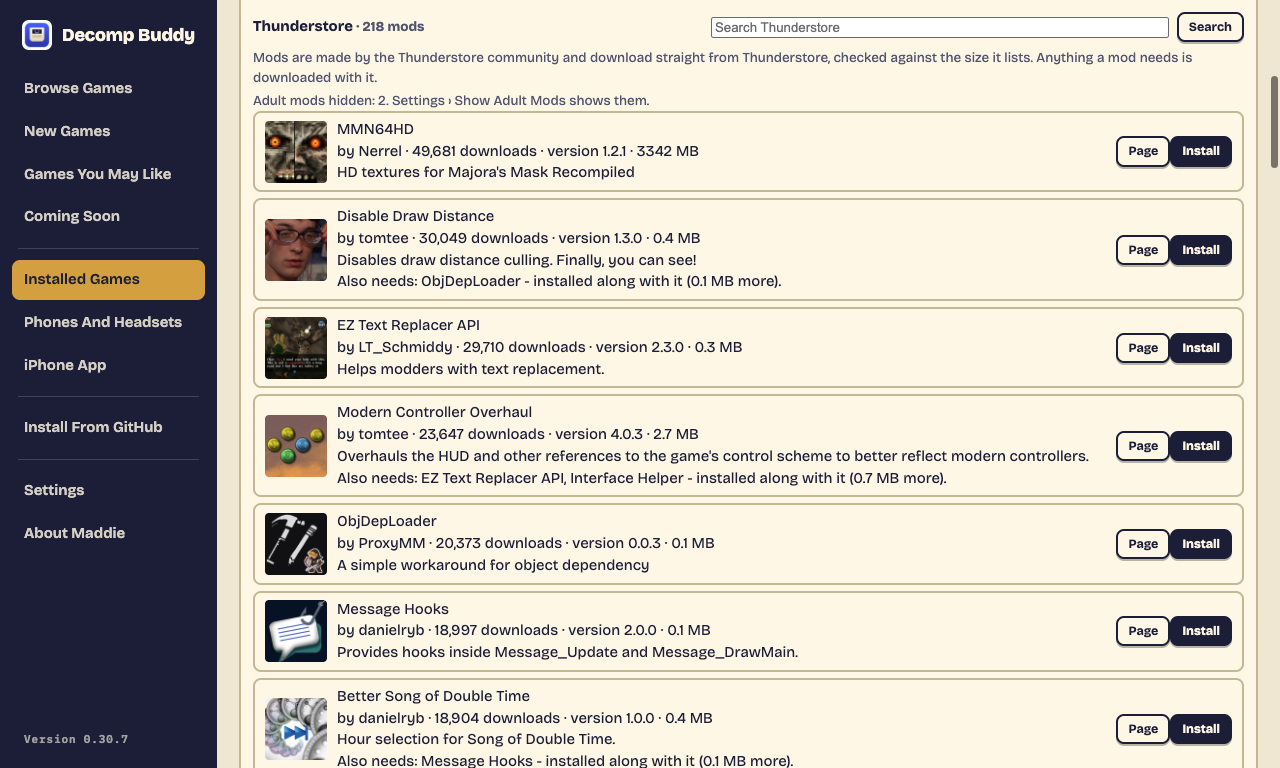
The RaytraceDecomp Buddy never downloads the game itself. It checks the player's own copy by checksum, region and version. Why does that matter to you?
Mainly because I want to avoid prison. I'm a hobbit-sized little girl who has never been in a fight in her whole life. I would not make it in prison.
Also, the people making these projects are careful never to ship the game itself, and a launcher that handed out game files would put all of them at risk. Decomp Buddy works with the copy you already own, and that's it.
Checking your file first saves everyone a headache too. The most common reason a port "doesn't work" is that someone has the wrong version or region of the game. This way, the player gets a clear "this is the wrong version" instead of a black screen, and the developer gets one less bug report that isn't really a bug.
The RaytraceHow did you build Decomp Buddy itself: languages, tools, AI or not, and roughly how much time has it taken?
Yes, AI. I'm upfront about it. I design Decomp Buddy and decide what it does, how it should feel and what it must never do, and the code is written with Claude, Anthropic's AI. I test every release and make the calls. It's JavaScript, built on Electron so the same app runs on Windows, Mac, Linux and Steam Deck. There's a small piece of Swift so the Mac version can use Apple Intelligence. The whole thing is open source under the GPL, so anyone can read exactly what it does.
The first version was September 13, so about six weeks so far. The repo went public on October 4, and it's had 20 releases since then. I work on it basically every single day. If I'm not answering bug reports or Reddit replies (some kinder than others), I'm fixing something or adding features. I have two whole notebook pages filled with features that are coming soon.
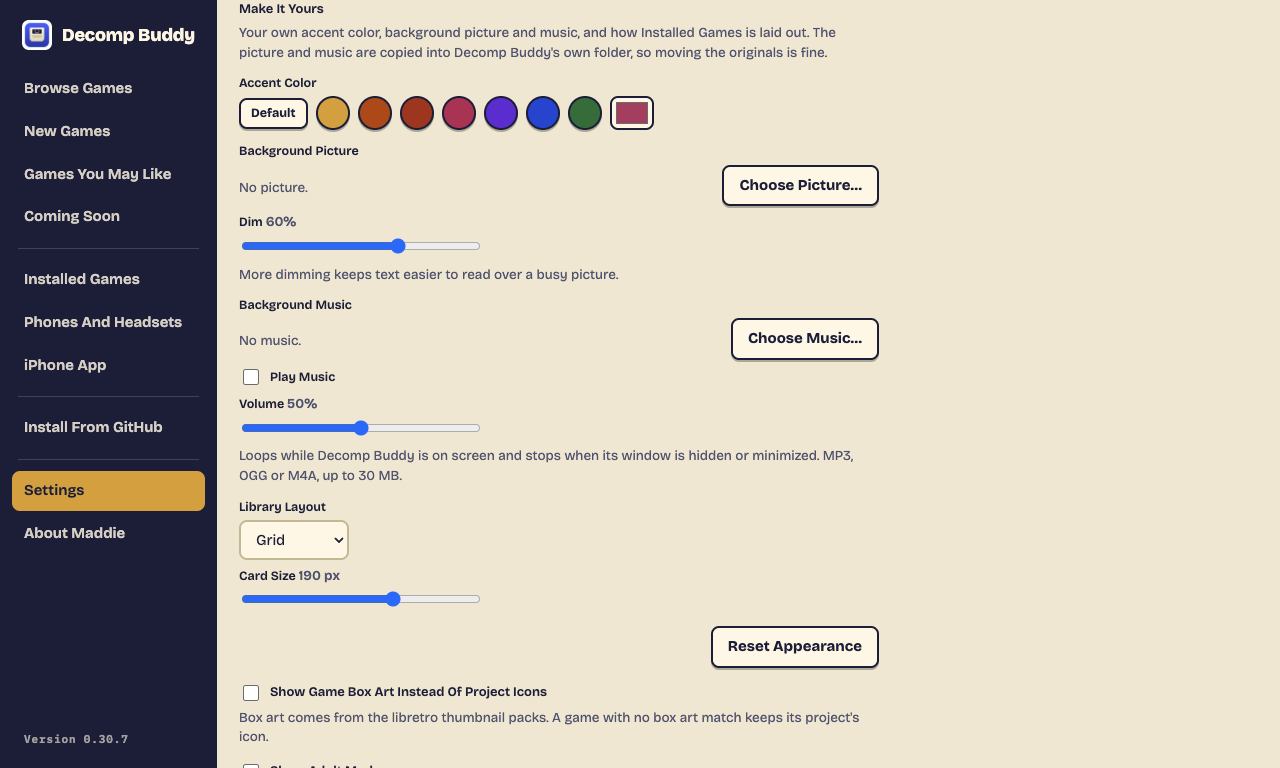
The RaytraceYou also make recomps: Super Mario All-Stars, Super Punch-Out, Top Gun and VPW64 Deluxe among them. Why those games, and how do you think about the legal side, given takedowns of fan projects this year?
Super Mario All-Stars and Super Punch-Out!! have always been my two favorite Super Nintendo games, and the Super Nintendo was, and still is, my favorite console of all time. Top Gun was a game I owned as a little girl and played the hell out of. I was in foster care for most of my childhood, and I was often physically abused. Shitty NES games were how I survived it.
On the legal side, I follow the same rules as everyone in the scene. None of my projects contain any of the game. You need your own copy, the build reads it on your computer, and nothing from it is stored in the repository. They're free, I don't make money from them, and if a rights holder ever asked me to take one down, I'd do it.
The RaytraceWhat's next for Decomp Buddy?
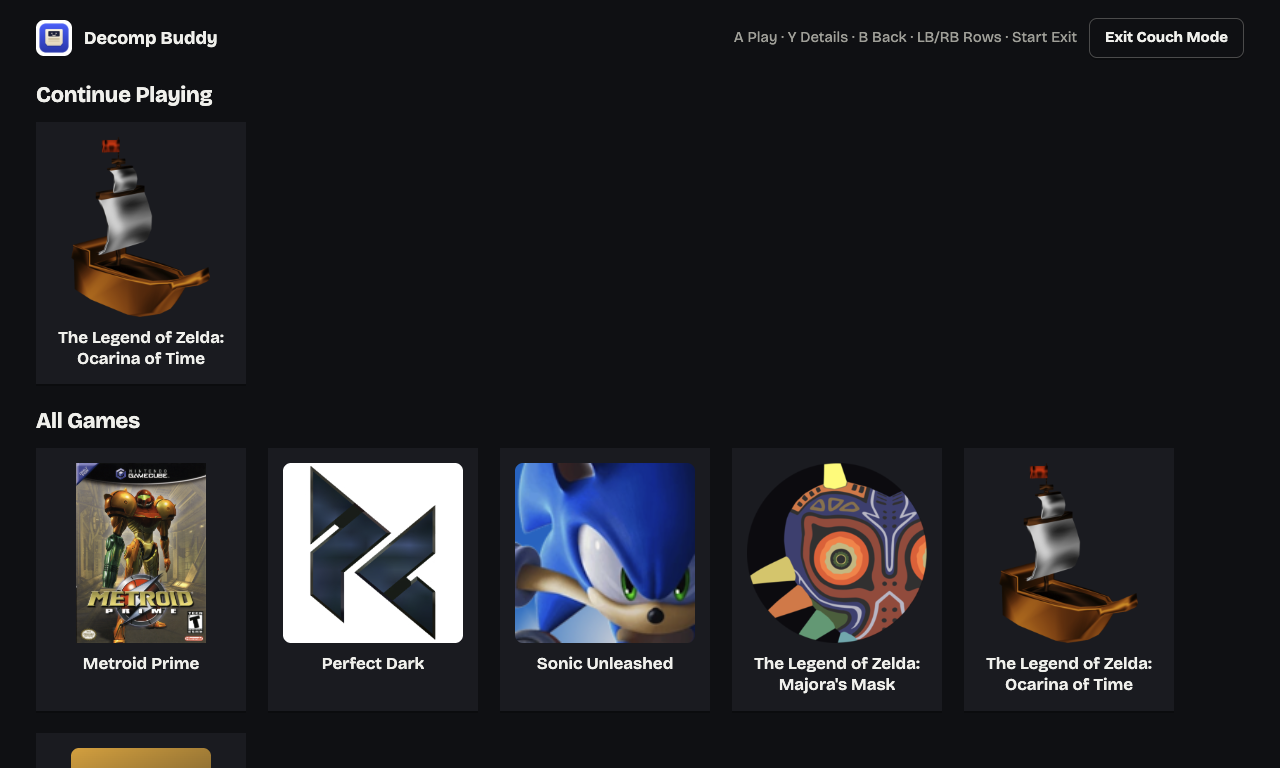
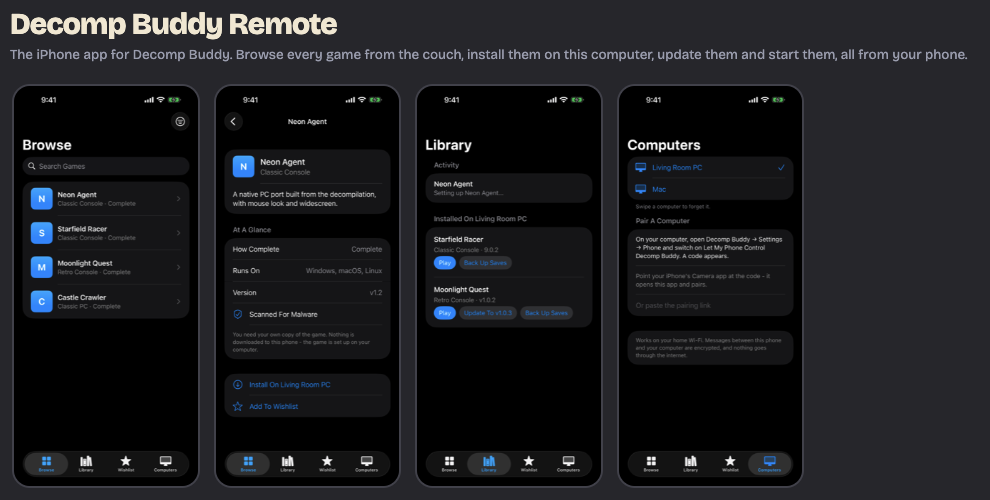
Exclusive news for The Raytrace: I'm about to drop a Decomp Buddy companion app. You'll be able to install projects from your phone straight to your PC, Mac or Linux computer, Steam Deck included. See a hot new release while you're at work? Just install it remotely. Want to see what new games dropped while you're on the toilet? It's all right there in your pocket. It's in testing right now, and it'll be out as soon as it's ready. The moment it goes live, I'll tell everyone in the app and on the website!
Beyond that? Mostly I want to keep listening. A lot of the last 20 releases came straight from people telling me what broke, especially on the Steam Deck.
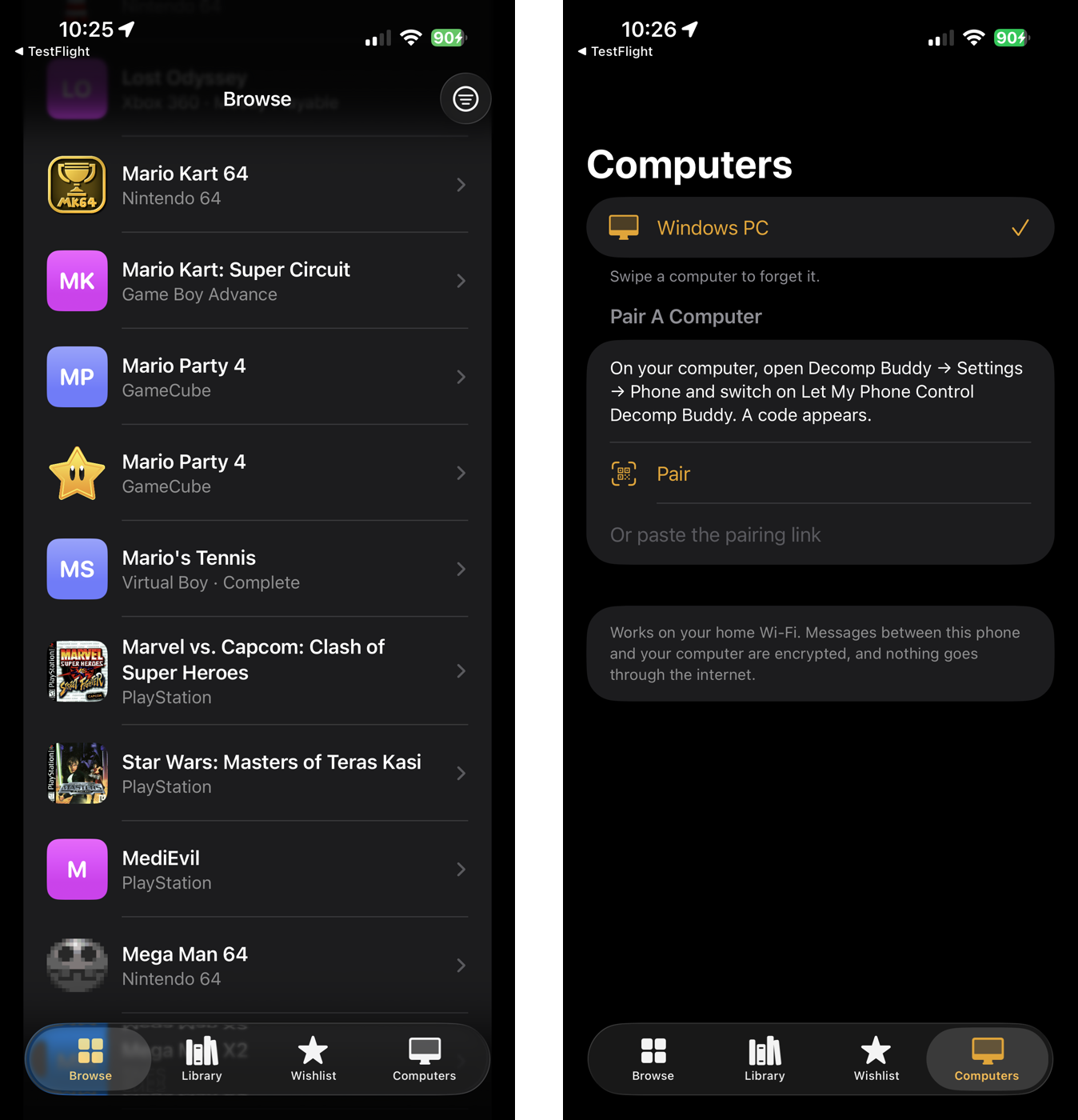
The RaytraceThe test build in that screenshot only works over your home Wi-Fi. Will you be able to install games when you're away from home, too?
I have decided to allow remote internet downloading. I was concerned about privacy (that’s always my first priority with my apps) but after more research, I don’t see any potential privacy concerns since there’s no middleman for the download request. I’ll also be implementing end-to-end encryption just in case which allows me to maintain my privacy promise.
The RaytraceIs there an Android version too?
Yes, both iPhone and Android. It’ll also work on iPad and Samsung tablets.
The RaytraceIs there anything you'd like readers to know that I haven't asked?
I've been part of the emulation scene since the IRC days. I lived through bleem!. Zophar's Domain was a daily visit. This project was a way I could finally give back to the community that gave me so much, and I mean that with all of my heart. Emulation and game preservation have always been among the true loves of my life, and I owe them so much.
So go thank the people who make these ports. Decomp Buddy is the easy part. Some of them have spent a massive amount of time on these projects for free, and a star on their GitHub page or a kind word means a lot to them. If you find a game in Decomp Buddy you love, follow the link to the project and tell them. And if you have the extra cash, and they accept donations, consider sending them a slice of pizza or some wonton soup.
If you've already dropped a few bucks on worthy projects and have a few left over, consider donating to this one through any of my websites. My monthly AI and Cloudflare bills have been ridiculous since I started this project. You can help keep it free forever! Maybe not forever, but as long as people are using it, I'll keep making it.
And finally, Decomp Buddy is free and open source, with no account and no ads. It's at decompbuddy.com. I'd be honored if you gave it a shot. And if you still like your other launcher better? Go back to it. But I don't think you'll want to.
About this interview
This interview was conducted by email on October 27 and 28, 2026. It was produced with assistance from Claude Opus 5.5 and was first published on October 29, 2026, at 15:46 UTC.
Previously in Long Exposure
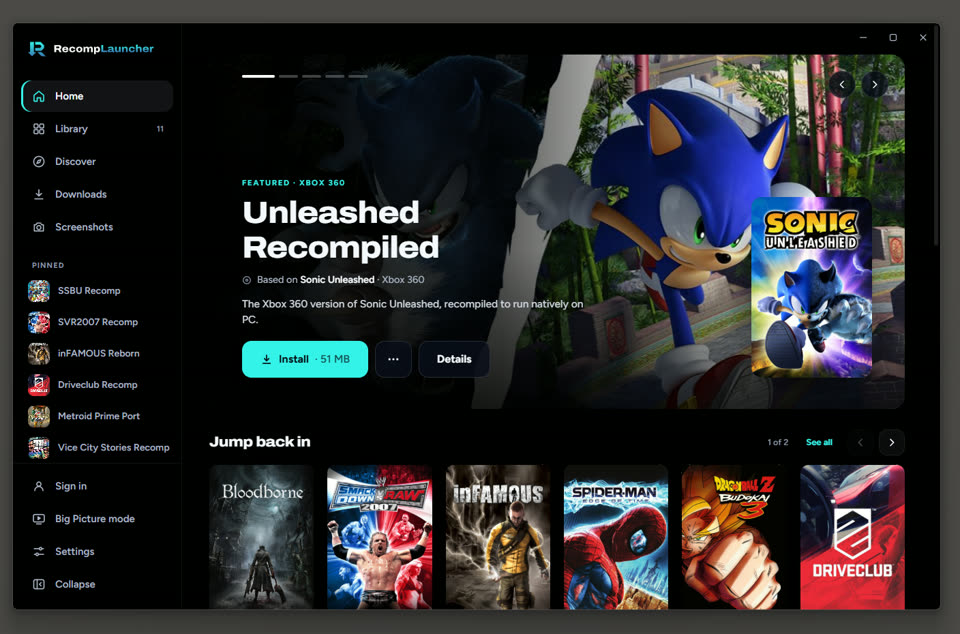
Every piece, on one contact sheet →Ripalda built a recomp store for jailbroken PS5s. Next up: RecompLauncher, for PC
Ripalda · RecompStore and RecompLauncher
The Denoiser · free, every Friday
Liked this? Get the week in video games, minus the noise.
One email a week from The Raytrace: the week's lead with its origin credited, new Long Exposure pieces, the breakout games, and the paper trail.
One email to confirm, then one a week. Unsubscribe any time. What we keep
Or follow The Raytrace on Bluesky: @theraytrace.com
Support The Raytrace
No ads here. Readers keep it going.
Interviews like this one take days. If you'd like more of them, chip in.
Through Stripe; we never see your card. Money never decides what we cover. Why a tip jar