Long Exposure · Interview · Exposure 004
Sword got PS2 discs playing on jailbroken PS5s. His PS3 port is aimed at Christmas
In a written interview, the developer behind PS5SX2 and PS5SX3 talks about getting PCSX2 running on the PS5, how he uses AI, the session reports behind his fixes, Sony, and why nobody in the media had asked him a question.
By Nicholas De Leon · November 6, 2026, at 16:13 UTC · 11 min read
PS5SX2 is a port of the PS2 emulator PCSX2 that runs natively on a jailbroken PS5. It plays PS2 games from discs in the console's own drive or a USB drive, upscaled for a 4K TV. No Sony BIOS, games or keys come with it: players supply a BIOS dumped from their own console, or try the experimental open-source one it ships.
Its first release came on Sept 28. About six weeks later it's on version 2.40, and GitHub counts about 234,000 downloads of its release files. Its maker, Sword, did the port alone, on top of years of work by PCSX2's developers, and labels every AI-assisted commit. PS5SX3 is the same idea for the PS3, built on the emulator RPCS3. It's in test builds on his Discord, and he's aiming for a public release at Christmas.
Sword's avatar on X is Sora from Kingdom Hearts, his "favourite franchise from childhood." So "it means a lot," he told us, that Kingdom Hearts 1.5 was one of the first games testers played straight off the disc on PS5SX3. "Sora is earning his spot."
IGN, Kotaku and others have covered PS5SX2, but Sword says we're the first to ask him a question. He answered ours in writing on Oct 29, before versions 2.20, 2.30 and 2.40 came out.
One update to what he says below: since 2.20 on Oct. 30, players can also turn off session reports from a Session logs option in the app. They're on by default, and nothing on the screen says so.

The RaytraceHow did PS5SX2 start? The README calls it a "can this even work?" experiment, and I noticed Twiso, your PS2 launcher, came a couple of weeks before it. When did you know it was actually going to work?
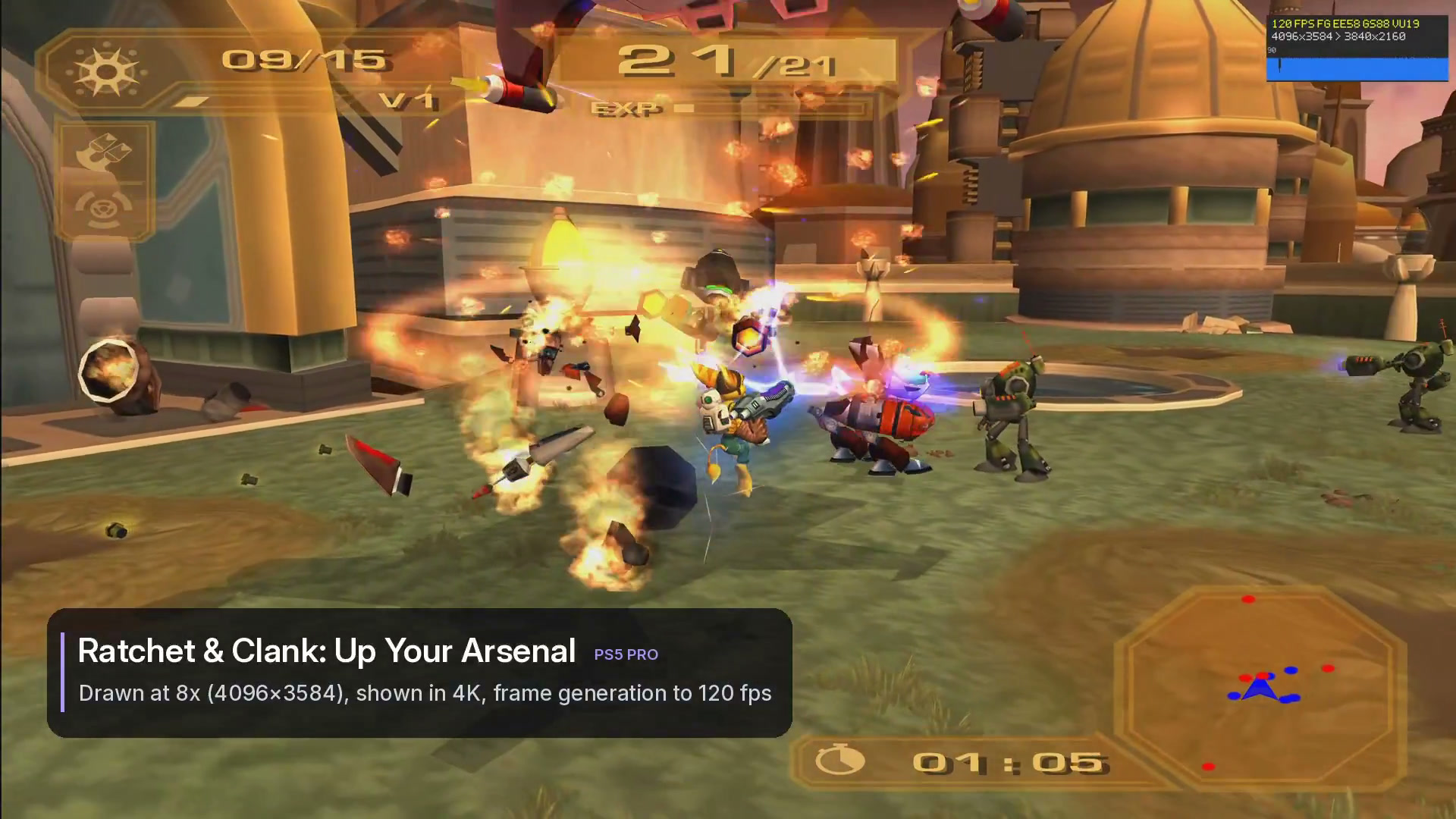
It really did start as a "can this even work?" experiment. Twiso came first. It was a launcher, and building it taught me how far you can push the PS5 from the homebrew side. The obvious next question was whether a real emulator could run natively, not as a port of a port. I knew it was going to work the moment the first game booted: the original Ratchet & Clank. Up to then it was all theory. Once a real PS2 game was running on the PS5, everything after that was a matter of making it better.
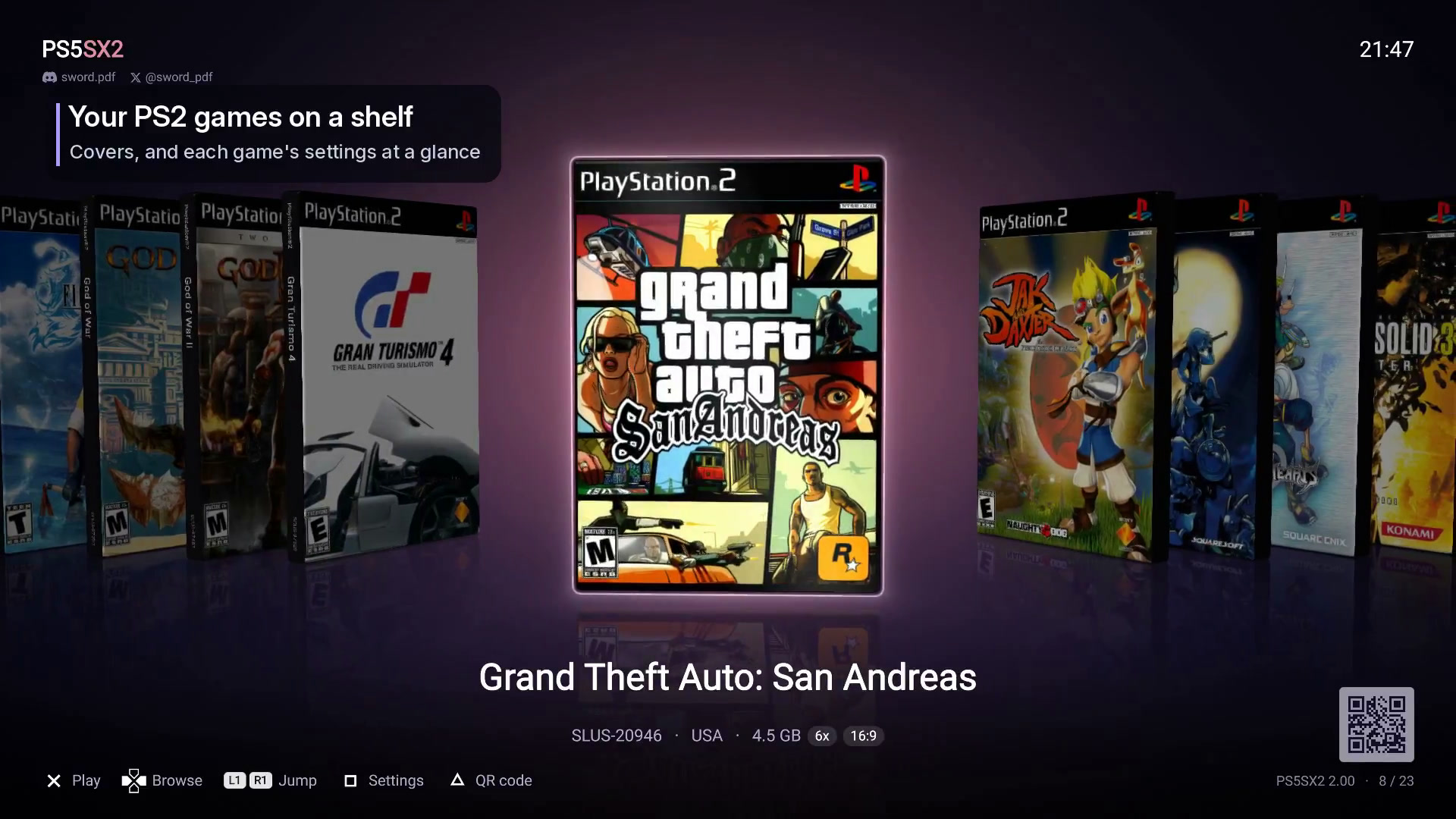
Today PS5SX2 plays PS2 discs straight from the PS5's drive or a USB drive, upscales to 4K, has frame generation, HD texture packs, RetroAchievements, PS2 online through PS Rewired, a cover shelf, game tiles on the PS5 home screen, and updates itself.
The RaytraceWhat were the hardest technical problems in getting PCSX2 running natively on the PS5: the recompilers on the PS5's CPU, the renderer on Mihawk-99's Vulkan driver, anything else? Which one took the longest to crack?
There were a few walls:
- The recompilers. PCSX2 turns PS2 code into native x86 code as it runs, and a PS5 game is not normally allowed to do that. Getting the dynamic recompilers working under the console's memory rules was the first big hurdle.
- The renderer. Mihawk-99's Vulkan driver is what makes a "real" renderer possible at all. Without it you're stuck.
- Storage and discs. A PS5 game can only write a limited amount quickly before writes slow to a crawl, which hurts things like texture packs and shader caches. Reading physical discs meant working out how to talk to the drive at all.
The renderer took the longest by far. At that point Mihawk-99's Vulkan driver was only half finished. I built on top of what Mihawk had made, filling in what PCSX2's renderer needed as I hit it.
The RaytraceYou say "we" when you talk about the projects. Who's on the team, and how do you work with people like Mihawk-99 and contributors like Heyde Moura, whose pull request brought USB disc drives?
PS5SX2 was a solo project: I did the port myself. It still stands on other people's work. Mihawk-99's Vulkan driver made the renderer possible, and Heyde Moura sent the pull request that brought USB disc drives: I tested it and shipped it. And the testers are a huge part of it. Every build goes out on Discord, people play their own games on their own consoles, and their session reports and feedback decide what gets fixed next.
PS5SX3 had more hands early on. Phi1ow and BUSHIGAN helped with its initial development, and they're dear colleagues I'm looking forward to working with on future projects.
And none of this exists without the people whose work it's built on. I credit all of them on GitHub:
PS5SX2:
- The PCSX2 Dev Team, for PCSX2, which does all the emulating.
- Mihawk-99, for the Vulkan driver all of PS5SX2 runs on: a modified version of ps5vk, his native Vulkan driver for the PS5's GPU (PS5_Vulkan), tweaked for PS5SX2. He also brings Mesa's RADV to the PS5 (PS5_Mesa).
- BlackBearReloaded, for ps5-native-app-boilerplate.
- John Törnblom, for the ps5-payload-dev SDK.
- xlenore/ps2-covers and the LaunchBox Games Database, for the covers.
- Gabriel Fonseca (gbfonseca), for the RetroAchievements groundwork PS5SX2's achievements are built on.
- RetroAchievements, for the achievements and its rcheevos library.
- The makers of the PCSX2 HD Texture Packs.
- PS Rewired, for keeping PS2 online games alive.
- OnionHEN, which the PS5SX2 Helper is based on.
- drakmor, for ShadowMountPlus, and VoidWhisper, for ShadowMount, which it's based on.
- Heyde Moura, for the pull request that brought USB disc drives.
- Al Azif, for the disc code.
PS5SX3:
- The RPCS3 team and contributors, for RPCS3.
- Mihawk-99, for his payload SDK and RADV-PS5 (PS5_Vulkan).
- The ps5-payload-dev SDK.
- Phi1ow and BUSHIGAN, for their help in its early development.
The RaytraceYou label your commits "(AI-assisted)", and you've posted about using AI tools to speed things up. How do you split the work between you and the tools? Which tools do you use, what do they do well, and where do you have to take over?
Every AI-assisted commit is labelled, because I think people should know how the code was made. I mostly use Claude, and some Grok.
How the work splits:
- I decide. What to build, what ships, what a fix has to prove before it goes in, and every public release, post and default setting goes through me.
- The tools do volume. Reading large parts of the RPCS3 and PCSX2 codebases, searching upstream issues and pull requests for a game, writing fixes and host tests, building, and going through thousands of session reports to find patterns. They're very good at the tedious, wide parts: "which of 2,000 logs have this crash, on which builds, with which settings."
- Where I take over. Anything that needs the actual console. A tool can't hold the controller and tell you a game feels wrong. Judgement calls too: what's worth shipping, what's too risky, and what the community actually wants.
It also isn't "type a prompt, get an emulator." PCSX2 and RPCS3 are many years of human work by their teams. What I do is the port: the PS5-specific layer, plus the fixes and tuning on top.
The RaytraceIt's been about a month since PS5SX2 came out. Have any of the big websites (IGN, GameSpot and so on) tried to interview you before? Kotaku, TechSpot, Tom's Hardware and others covered it, mostly from your posts and release notes, and a few headlines called it "vibe-coded" or "AI-coded". I'm curious how you've been treated by the media.
Honestly, nobody has approached me. You're the first. IGN, Kotaku and plenty of others wrote about it, and a lot of big YouTube channels covered it too: Modded Warfare, Modern Vintage Gamer, Mystic, Asmongold, SomeOrdinaryGamers. But it was all from my posts and release notes. Nobody asked me a single question, so thank you for actually asking.
The Denoiser · free, every Friday
Enjoying this? Get the week in video games, minus the noise.
One email a week from The Raytrace: the week's lead with its origin credited, new Long Exposure pieces, the breakout games, and the paper trail.
One email to confirm, then one a week. Unsubscribe any time. What we keep
Or follow The Raytrace on Bluesky: @theraytrace.com
Support The Raytrace
No ads here. Readers keep it going.
Interviews like this one take days. If you'd like more of them, chip in.
Through Stripe; we never see your card. Money never decides what we cover. Why a tip jar
The RaytraceSome people use "vibe coding" as a put-down. There appears to be a real bias against AI-assisted development, but projects like yours show what is possible. What do you make of folks who insist that AI-assisted coding equals slop?
Shipping updates this fast as one person would be impossible without AI. PS5SX2 and PS5SX3 are proof that AI-assisted doesn't automatically mean slop. Slop is code nobody checks. The tool doesn't decide that, the process does. Every build here goes to testers first. Fixes come with tests, crash reports are grouped and tracked from build to build, and if something regresses I see it in the reports within hours. Judge the result: the games run, on hardware people already own. If a project is sloppy, that's on whoever ships it, AI or not.
The RaytracePhysical discs were a big moment: "PS2 discs. Straight into a PS5." You also wrote that "the PS5 is slowly becoming the PlayStation it should've been." What did you mean by that, and why did disc support matter so much to you?
The PS5 has a disc drive and is a PlayStation, but the shelf of PS2 and PS3 discs people own can't be played on it. Being able to put a disc you've owned for twenty years into the console and just play it is what backwards compatibility should have looked like. Discs mattered because they're the real thing. Your own game, no downloads, no files to hunt for. That's where preservation and ownership meet. You can put the disc in the PS5's own drive and play straight off it, or use an external drive.
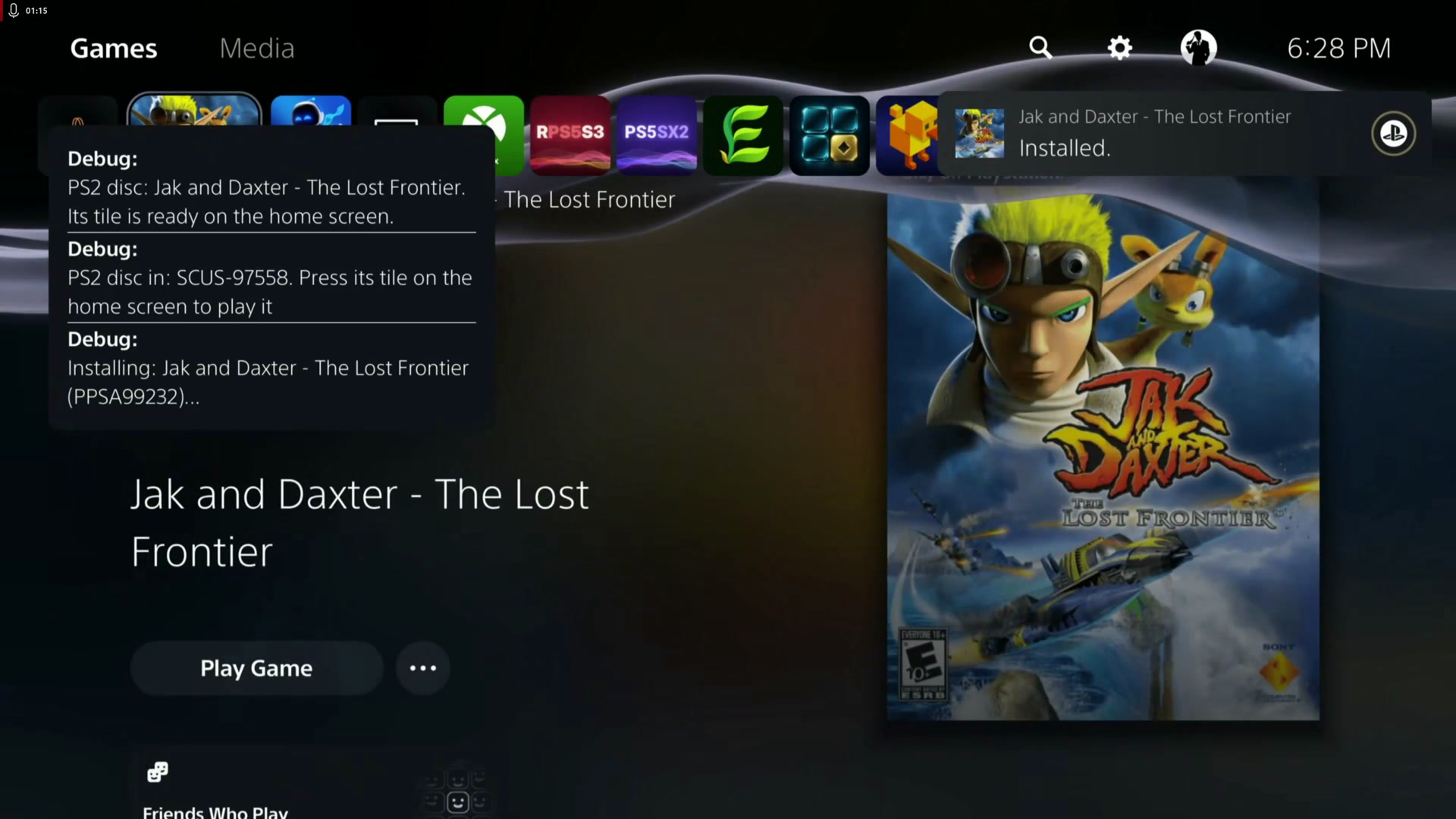
The RaytraceThe README's compatibility list comes from session reports: 37,820 sessions on 5,719 consoles in five days. What does a report include, can players turn it off, and what have the reports taught you?
The reports are sent by the PS5SX2 Installer, the small program people use to install and update PS5SX2. They're on by default. When PS5SX2 closes after a game, or after a problem, the Installer sends that session's logs.
A report contains:
- the build, which game was played and how the session ended (normally, a crash, a hang);
- the session's logs: the emulator's own log, a per-minute performance line (fps, speed), the settings in use, the PS5's firmware version and chip;
- a GPU dump if the graphics hung, and the end of the helper's log.
What's left out:
- your game list;
- the settings page's password token;
- IP addresses, which are replaced with x.x.x.x.
Each console is identified by a random number the Installer makes up the first time it runs. It isn't Sony's console ID, and no PSN name or account is involved. A tester can add a name if they choose to. Sessions that only showed the menu and closed normally aren't sent.
To turn it off, create an empty file called "no-log-upload" in /data/PS5SX2-Installer. Then the Installer still installs and updates, but sends nothing.
That's what turns "game X doesn't work" into something you can actually fix.
What they've taught me:
- Compatibility depends on the game, but also on settings, firmware and the console model.
- Many "broken" games are really incomplete copies or missing files on the player's side, and the reports let me tell those apart from real bugs.
- When I compare the sessions that run a game best against the rest, the settings behind them become that game's new defaults.
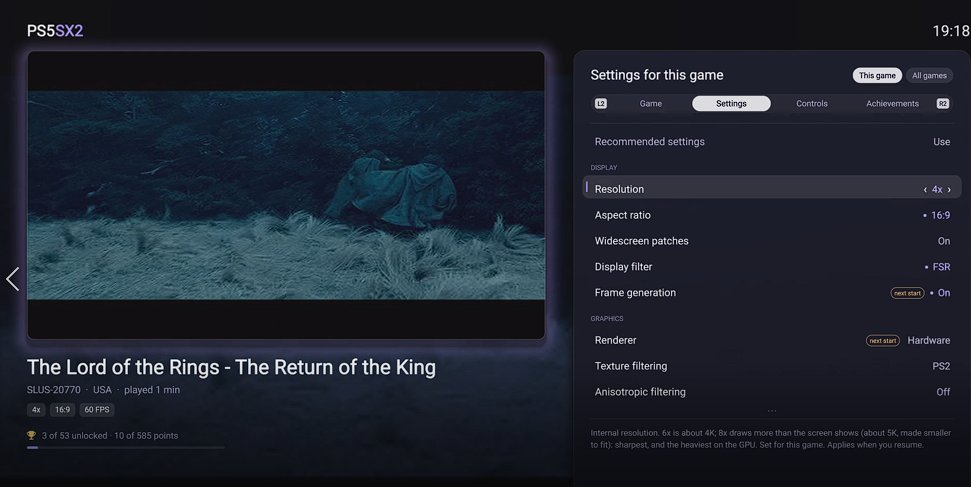
The RaytraceFrame generation arrived in 2.00, and you split it out as ps5-framegen. How does it work without motion vectors or depth, and which games benefit most?
It's built on AMD's FSR3 frame interpolation, which is open source (MIT), redone on plain Vulkan so it runs on the PS5 driver. A modern PC game hands FSR3 its motion vectors and depth. A PS2 or PS3 game gives you neither, so ps5-framegen uses only FSR3's optical-flow path, which works out the motion from the finished frames:
- Optical flow. It compares the brightness of two real frames at seven sizes, from coarse to fine, to find where each block of the picture moved. It also spots scene cuts, so it doesn't blend two different shots.
- The in-between frame. For each pixel, it tries several possible motions and keeps the one where the previous frame and the next one agree. Where nothing agrees, like the edge of something passing in front, it avoids smearing. Anything that hasn't changed for a few frames, like a HUD or text, is kept perfectly still.
I added that per-pixel part on top of FSR3, because without the game's own motion data, FSR3's flow alone isn't enough.
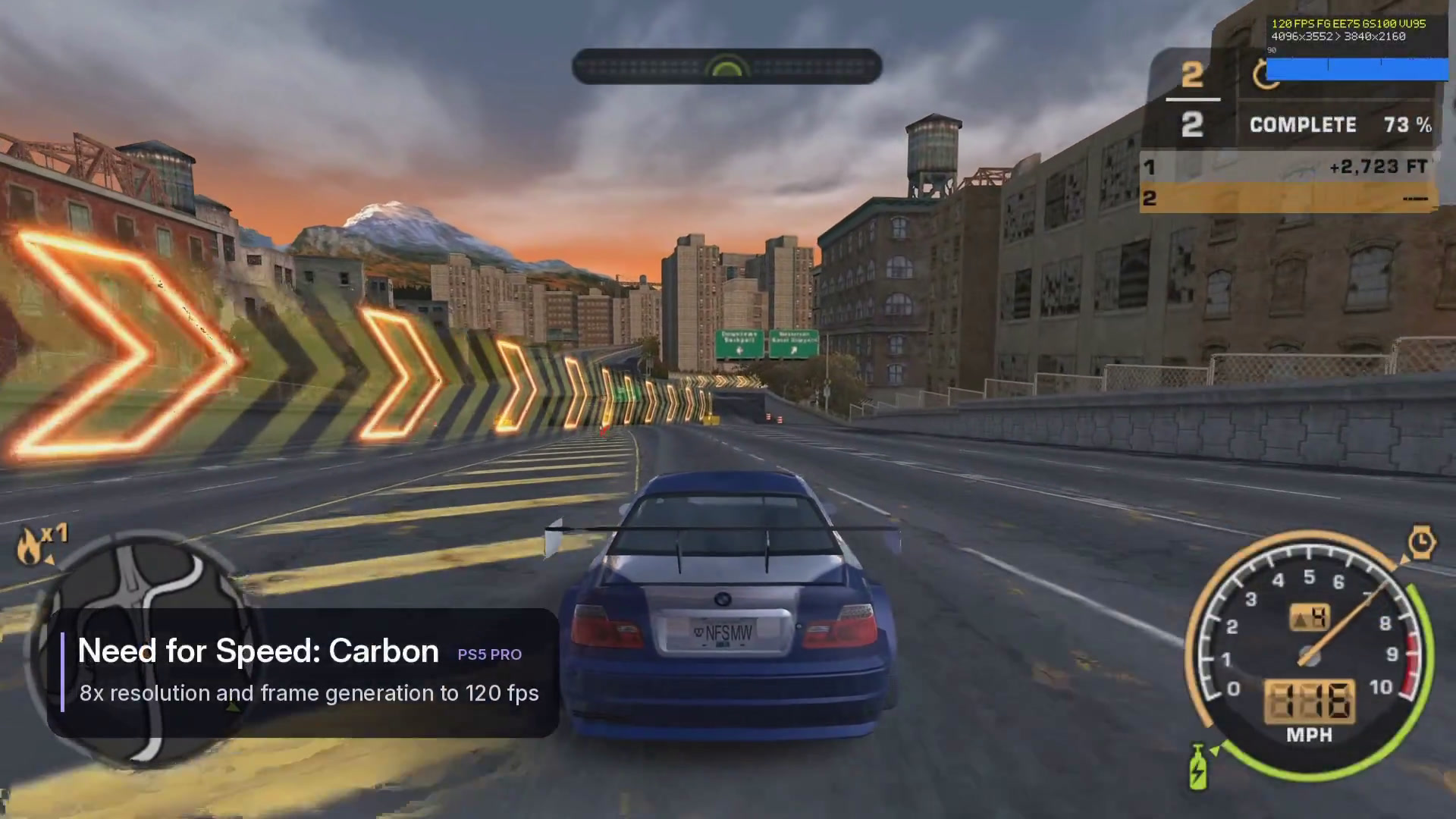
The generated frame goes in between the game's two real frames. Games that run at 30 fps benefit most: they're shown at 60 on any TV. A 60 fps game can go to 120 if the TV really runs at 120 Hz. It costs a bit of input lag, and very fast or chaotic scenes show the most artefacts, which is why it can be switched per game.
The RaytraceTell me about PS5SX3. Where is it today, what's harder about the PS3 than the PS2, and when do you hope to have a public release?
PS5SX3 is RPCS3 on the PS5. It's in open test builds on the Discord (Test Build 19 went out today), and it already has a PS3-style XMB menu, physical PS3 discs from the PS5's drive or a USB Blu-ray drive, game tiles on the home screen, frame generation, in-app updates, and per-game settings learned from testers' sessions.
Why the PS3 is so much harder than the PS2:
- The Cell processor. One main core plus six SPUs, each with its own memory and its own code, all of which has to be recompiled on the fly.
- The graphics chip. The RSX's command stream has to be translated in real time.
- Every game uses all of it differently. A fix for one game can slow down another, which is why every build is tested so widely.
On the PS5 there's the extra challenge of fitting all of that into what a single game is allowed to use: CPU cores, memory, how fast it can write to storage.
As for a public release, I'd like to have it out for Christmas. That's what I'm aiming for.
The RaytraceHow do you think about Sony and the legal side of projects like these? Has anyone from Sony or the PCSX2 team been in touch?
It's not illegal to port an emulator. PCSX2 and RPCS3 are legal, open-source projects, and I'm bringing them to another piece of hardware. These ports are meant for people to play their original discs and their own legal game dumps. That's the whole point of disc support: you put in the game you bought. No Sony files are included: no BIOS, no firmware, no games. The projects don't promote piracy. And no, no one from Sony or the emulator teams has contacted me.
The RaytraceYou've said everything you build will stay free, but the costs add up. What are the costs, and where can readers support you?
The costs are adding up quickly. Pushing daily updates for two emulators at this pace takes a big amount of money to sustain. If you'd like to help keep it going, you can support me at ko-fi.com/sword95. Everything stays free either way.
The RaytraceWhat's next, and is there anything you'd like readers to know that I haven't asked?
What's next is getting PS5SX3 ready for a public release, and keeping PS5SX2 improving.
But the thing I most want readers to know is how much the testers matter. The number of people testing these is insane: around 500,000 session reports for PS5SX2 and around 100,000 for PS5SX3. Every one of those helps find a crash, tune a game or confirm a fix. None of this would move as fast as it does without them, so thank you to every single one of you.
About this interview
This interview was conducted in writing, over X direct messages, on October 29, 2026. It was produced with assistance from Claude Opus 5.5 and was first published on November 6, 2026, at 16:13 UTC.
Previously in Long Exposure
Every piece, on one contact sheet →Decomp Buddy puts 2,218 decomps and recomps a click away. Next: a phone app to install them
Maddie Thomas · Decomp Buddy